Stamped, Stained, or Exposed Aggregate: Choosing a Decorative Finish
By Grayline Concrete Works · 7/18/2026
Concrete is a finish material, not just a grey slab. That belief runs the whole company, and the three techniques below are how we prove it. Each one takes an ordinary pour and turns it into a surface with real character. Which one is right depends on the look you are after and where it is going.
Stamped concrete
Stamping presses a pattern into the slab while the concrete is still green. Slate, wood plank, cobblestone, and ashlar stone are all common. Because the texture is the concrete itself, it wears like concrete: there are no pavers to heave, no joints to weed, and no boards to rot. Stamped work is a favorite for patios and walkways where you want the look of stone or plank at a fraction of the maintenance.
Stained concrete
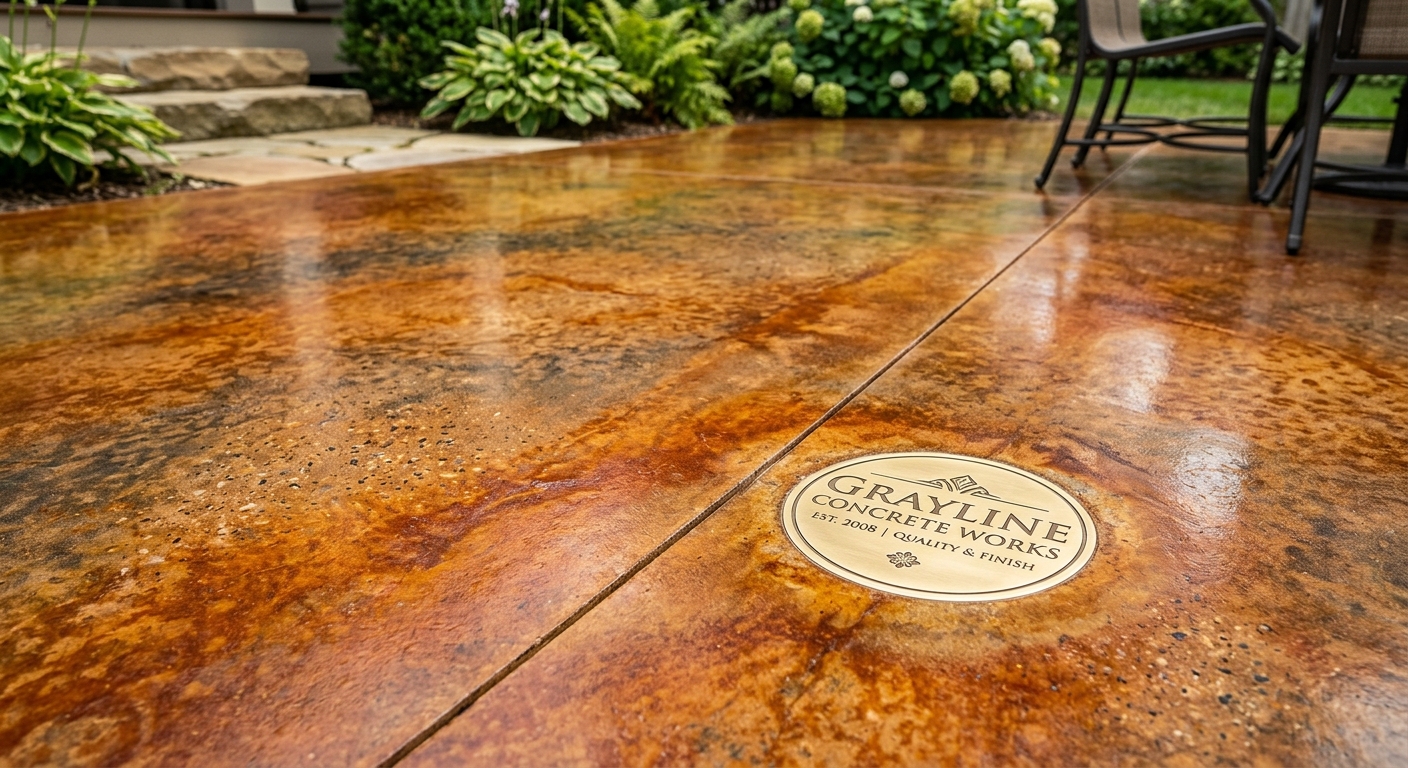
Stains put color inside the slab rather than on top of it. Reactive acid stains create variegated, translucent, marbled tones that no two floors share. Water-based stains offer a wider and more predictable palette. Staining is ideal for patios and floors, and it is one of the best ways to refresh an existing slab that is structurally sound but visually tired.
Exposed aggregate
Exposed aggregate reveals the natural stone in the mix by washing away the top layer of cement paste. Seeding in local river rock produces a textured, high-traction surface that suits driveways on a grade and areas that get wet. It reads as intentional and holds up beautifully to Idaho winters.
How to choose
If you want the look of stone with low upkeep, stamp it. If you want permanent, one-of-a-kind color, stain it. If you need grip and a natural texture, expose the aggregate. In practice we often combine them on a single project, and the best way to decide is to see samples in person. Bring us the space and we will show you what each finish does with it.
